Skip to content

Mesrop Mashtots and Sahak Partev

Music
Type
Mesrop Mashtots and Sahak Partev are among the exceptional figures of Armenian culture whose work lies at the foundation not only of literature, but also of sacred music, church singing, and the formation of national identity. Their names are connected with the creation of the Armenian alphabet, the translation of the Bible into Armenian, the formation of a translation school, and the development of Armenian spiritual expression.

In Armenian musical heritage, Mashtots and Sahak are especially important because, after the creation of the Armenian script, it became possible to preserve church texts, prayers, sharakans, and liturgical language in written Armenian. In this way, they created the cultural environment upon which Armenian sacred chant later developed.
Life and historical context

Life and historical context

Mesrop Mashtots was born around the 360s in the village of Hatsekats in the province of Taron. He received an education, knew Greek, Syriac, and Persian, served for some time at the royal court, and later left secular life to devote himself to spiritual and educational work. During his preaching activity, Mashtots saw that the Armenian people needed their own script in order to fully understand Christian teaching. The Bible and church literature were mainly available in Greek and Syriac, which made their spread among the broader population difficult.

Sahak Partev, also known as Sahak the Great, was born in the 4th century and served as Catholicos of the Armenian Church. He was the son of Nerses the Great and one of the last Armenian catholicoi descended from the line of Gregory the Illuminator. Sahak Partev was highly educated, knew languages, and was skilled in theology, rhetoric, philosophy, and music. He became one of Mesrop Mashtots’s main supporters and played an important role in the creation and spread of the Armenian script.

In 405, Mesrop Mashtots created the Armenian alphabet. This work became possible also through the support of Sahak Partev and King Vramshapuh. After the creation of the script, Mashtots and Sahak founded a school of translators in Vagharshapat, where the translation of the Bible and other important Christian books into Armenian began.

Historical and Cultural Context

The work of Mashtots and Sahak Partev unfolded at a time when Armenia faced major political, religious, and cultural challenges. Christianity had already been adopted as the state religion, but church education and liturgical life had not yet been fully rooted in the language of the people. The absence of an Armenian script was a major obstacle to the development of the national church, education, and culture.

Under these conditions, the creation of the Armenian alphabet became not only a literary event, but also a state, spiritual, and cultural milestone. It strengthened the position of the Armenian language, ensured the spread of Christian teaching in the mother tongue, and created the foundation of national literacy. Prayer, sermon, sharakan, and translated literature in Armenian became the axis of the Armenian people’s spiritual self-awareness.
Creative work and key contributions

Creative work and key contributions

The work of Mesrop Mashtots and Sahak Partev should be understood not only as the creation of a script, but as a complete cultural program. They created a system through which the Armenian people received their own written language, their own school, their own translation tradition, and their own church literature.

In addition to creating the alphabet, Mashtots was involved in preaching, teaching, translation, and the development of spiritual literature. A number of sacred songs, sermons, and examples of church literature are also associated with his name. However, Mashtots should not be presented as a composer in the modern sense. His importance for Armenian music lies in the fact that he helped create the linguistic and written foundation without which the Armenian sharakan tradition could not have developed so firmly.

Sahak Partev, as Catholicos, organized and supported educational and translation work. He played an important role in the Armenian translation of the Bible, guided the development of spiritual education, and supported the formation of Armenian church culture. Medieval and ecclesiastical tradition also speaks of him as a highly educated spiritual leader skilled in music.

Analysis of Musical and Spiritual Value

The significance of Mashtots and Sahak Partev in the history of Armenian music should be viewed at a foundational level. They did not create a musical school in the sense that Komitas or Makar Yekmalyan later did, but they created the linguistic, literary, and ecclesiastical environment upon which Armenian sacred chant was built.

Armenian church music is closely connected with the word, prayer, and liturgical text. When Armenian received its written form, it became possible not only to translate sacred books, but also to form Armenian prayer, sermon, sharakan, and liturgical language. This was extremely important because sacred singing began to sound in the language of the people and become part of national identity.

Thanks to the Mashtotsian script, Armenian sacred song became not only an orally transmitted tradition, but also part of written culture. In later centuries, Armenian sharakan writing, khaz notation, and church singing developed precisely on the foundation created in the 5th century. For this reason, Mashtots and Sahak Partev should be seen as figures who shaped the earliest foundations of Armenian sacred musical culture.

Main Works and Cultural Contributions

Creation of the Armenian alphabet — 405

Organization and realization of the Armenian translation of the Bible — 5th century

Formation of the translation school in Vagharshapat — 5th century

Creation of the foundation of Armenian Christian literature

Development of Armenian church education and literacy

Written strengthening of Armenian spiritual expression, prayer, and the sharakan tradition

Beginning of the translation movement

Strengthening of the linguistic and cultural foundation of Armenian identity

Commentary on Selected Works

The Armenian Alphabet

The creation of the Armenian alphabet is the central event in the work of Mashtots and Sahak Partev. It was not only a technical writing system, but also an instrument of national self-preservation. The script made it possible to write, teach, preach, translate, and create in Armenian. From the perspective of musical culture, it was important because the words of church song and ritual could be fixed in Armenian.

The Armenian Translation of the Bible

The translation of the Bible into Armenian became one of the greatest events of Armenian Christian culture. It shaped the Armenian theological language and influenced literature, education, preaching, and church singing. The Armenianization of the Holy Scriptures made it possible for faith, prayer, and sacred song to become understandable and familiar to the people.

The Translation School

The translation school established in Vagharshapat became one of the first major centers of Armenian written culture. There, a generation was formed that translated and created religious, philosophical, and literary materials in Armenian. This school was also important for musical culture, because the Armenianization of church texts later became a foundation for the development of sacred songs and sharakans.

Legacy and influence

Legacy and influence

The legacy of Mesrop Mashtots and Sahak Partev belongs to the deepest layers of the Armenian people’s cultural memory. Thanks to them, Armenian became not only a spoken language, but also a written, educational, theological, and cultural language. They created the foundation upon which Armenian literature, historiography, school, church literature, and sacred music later developed.

In Armenian musical heritage, their place should be understood as foundational. If in later centuries Armenian sharakan writers, sacred singers, khaz notators, and composers created great values, the beginning of that path was laid by the work of Mashtots and Sahak Partev. They gave the Armenian people not only a script, but also the possibility to pray, sing, and create culture in their own language.

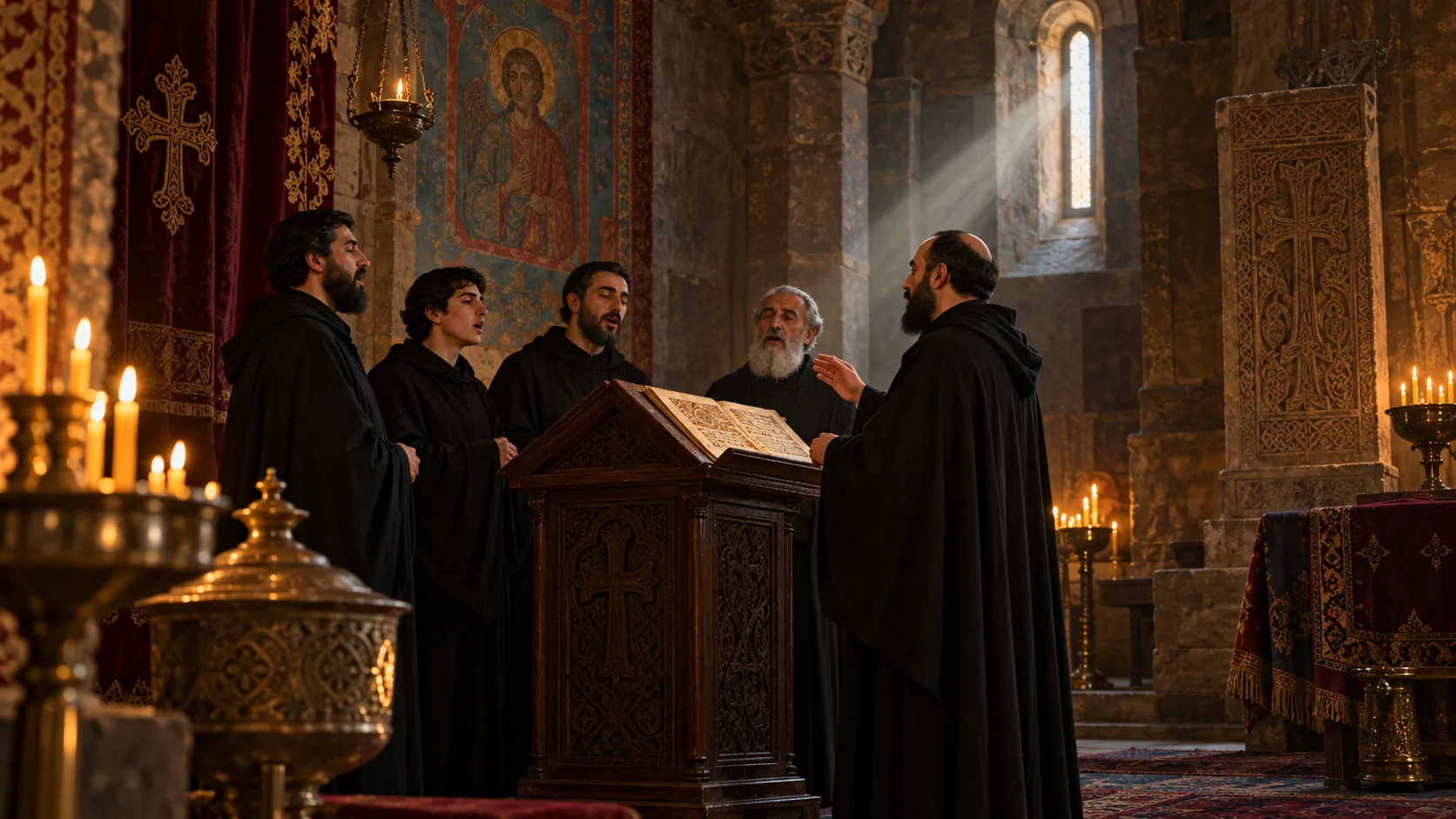
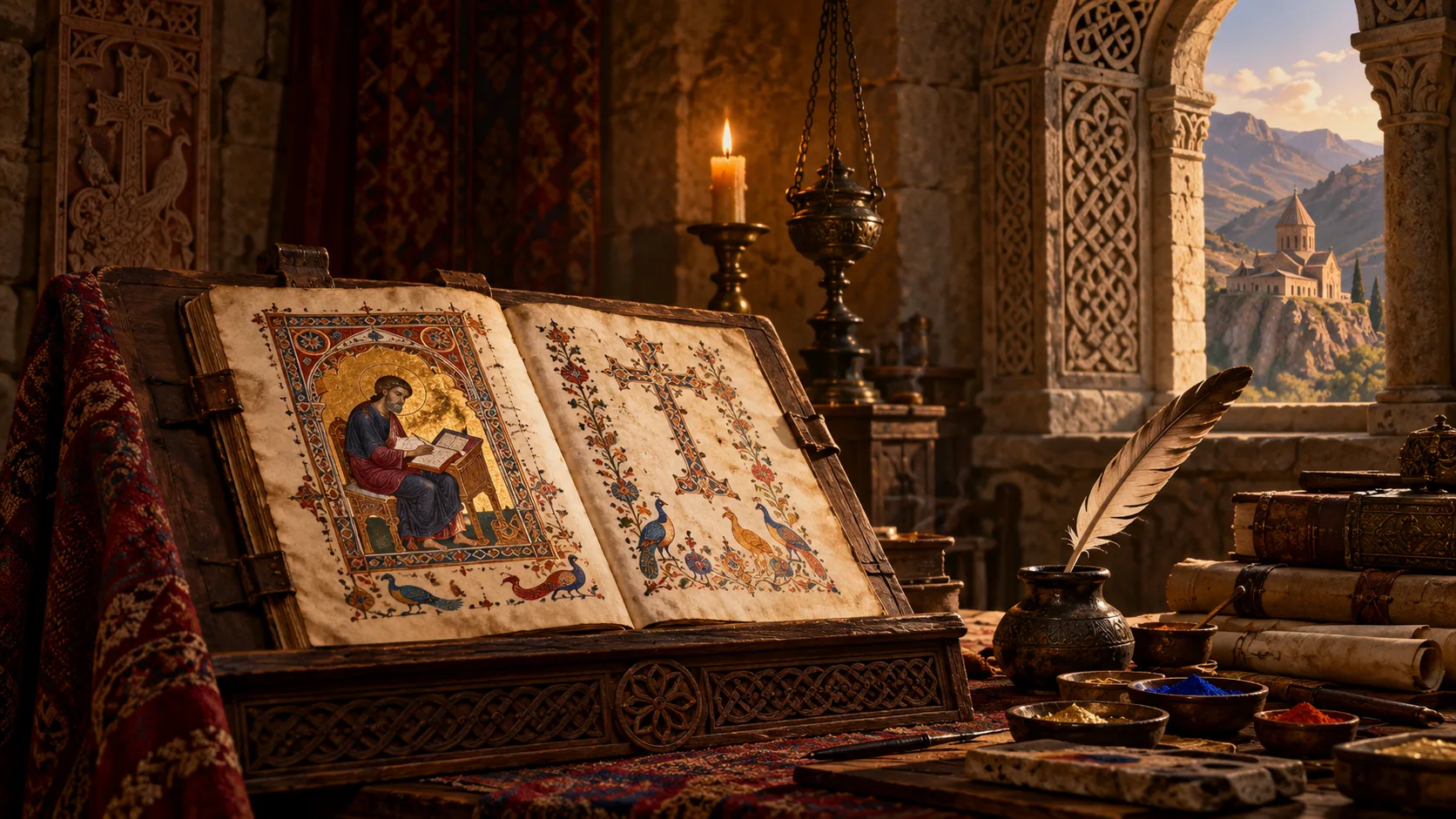
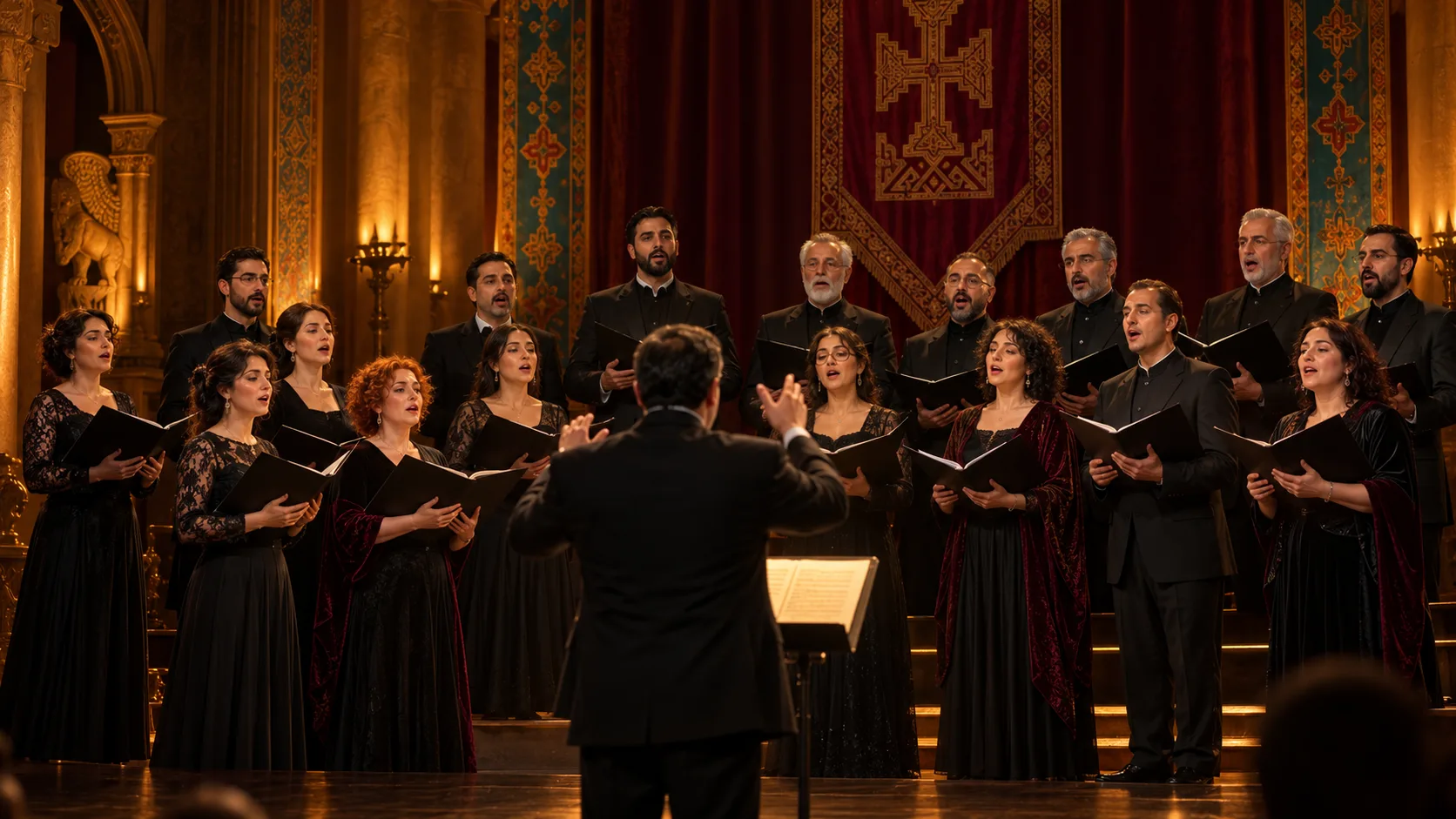
The cover and section images are AI-generated artistic illustrations, not authentic depictions of historical scenes or people.

Photography Archive

Gallery

Explore more entries

Back to Musicians