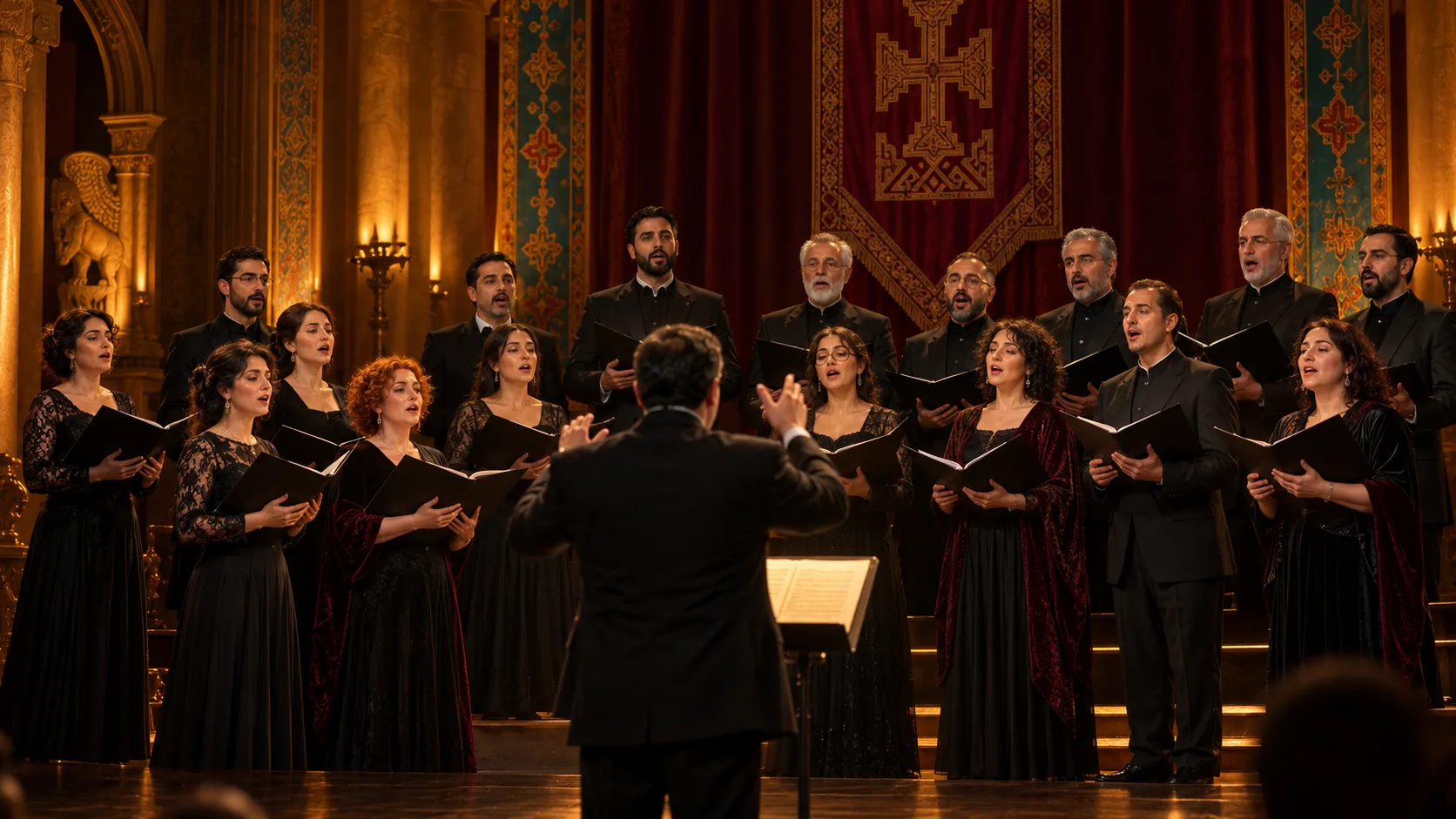
Lusine Zakaryan’s creative activity should be viewed first of all as a great phenomenon of performance art. She was not a composer in the usual sense of the word, but her interpretations have independent artistic value. Through her voice, many works received new life, new psychological depth, and new national meaning.
The main feature of her singing is purity. This means not only purity of voice, but also purity of expression. In Zakaryan’s performance, there is no unnecessary sentimentality, vocal display, or external drama. She sings with inner light, restraint, and deep faith.
Her soprano is transparent and luminous, yet at the same time deeply emotional. It never becomes cold or merely technical. Her voice seems to preserve the naturalness of human breath. That is why her performances are often perceived not as stage appearances, but as prayer or confession.
In Komitas’s songs, she is distinguished by extremely delicate verbal expression. For her, the word is as important as the melody. She does not hurry, does not make the music heavy, does not shout. She opens the inner silence of the song. This quality is especially noticeable in her interpretations of “Krounk,” “Antuni,” “Garun a,” and other Komitas songs.
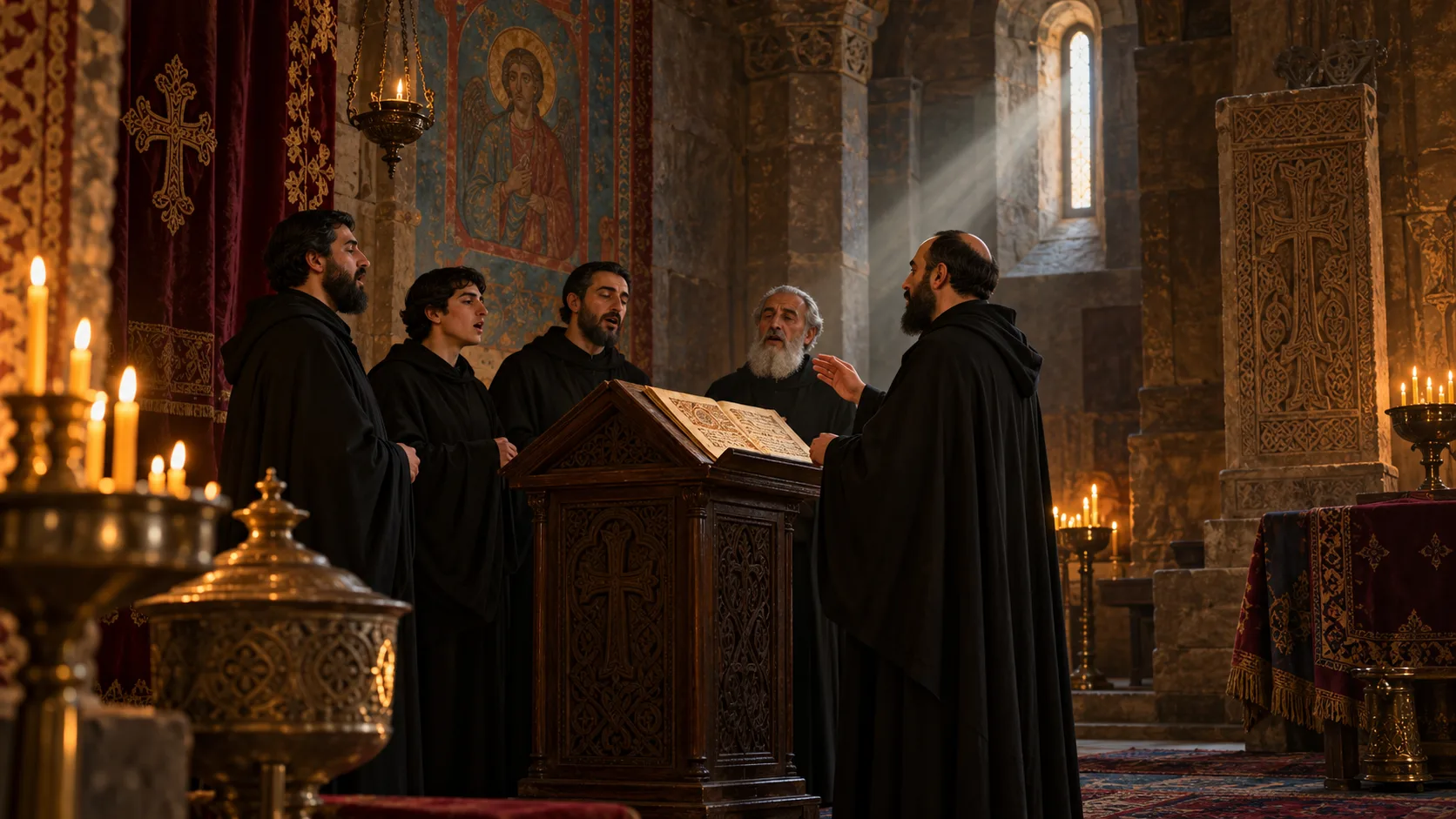
In the performance of Armenian spiritual songs, Lusine Zakaryan reached such a height that her voice came to be perceived as one of the symbols of Armenian church singing. “Sourp, Sourp,” “Aravot Louso,” sharakans, and taghs in her performance acquire not only musical but also spiritual value.
She was able to unite three important worlds: church singing, folk song, and the classical vocal school. This union was not artificial in her art. She did not turn folk song into opera, nor spiritual song into concert effect. She preserved the inner dignity of each genre.
5. Main performance legacy
In Lusine Zakaryan’s case, the section on “works” should be understood as performance legacy, repertoire, recordings, and the works that became cultural values through her interpretation.
Her main performance directions include:
interpretations of Komitas songs;
Armenian spiritual songs, sharakans, and taghs;
Armenian folk songs;
medieval Armenian spiritual music;
Western European classical vocal works;
romances and vocal works by Russian and Armenian composers;
spiritual and classical performances accompanied by organ.
Among the known recordings and album releases associated with her name are:
“The Holy Voice of Armenia” — 1999
“Komitas” — 1999
“Armenian Medieval Spiritual Music”
“Krounk / Groung”
“Ave Maria”
“Armenian Sacred Songs”
“Lusine Zakaryan sings Komitas”
Especially important in her performance legacy are:
“Krounk” — Komitas
“Antuni” — Komitas
“Garun a” — Komitas
“Sourp, Sourp” — Makar Yekmalyan
“Aravot Louso” — Nerses Shnorhali
“Ter, Voghormya”
“Havun, Havun”
Sharakans and Armenian church taghs
“Vocalise” — Arno Babajanyan
Arno Babajanyan wrote “Vocalise” for Lusine Zakaryan, which in itself shows how unique her voice was for Armenian composers. This work is not simply a display of vocal technique, but a revelation of the spiritual and emotional possibilities of the voice.
6. Commentary on selected works
“Krounk”
“Krounk” is one of Komitas’s most painful and profound songs, and in Lusine Zakaryan’s performance it becomes an almost pure sonic image of Armenian longing. In the song, the crane is not merely a bird; it is a messenger, a sign of the distant homeland, the last hope of connection with a lost world.
Zakaryan does not sing this song with the external force of lament. She sings with restraint, with an inner break, as if the voice comes not from the stage, but from the depths of memory. Her performance turns “Krounk” not only into a song, but into a national state of soul.
“Antuni”
“Antuni” is one of the deepest psychological songs of the Armenian people, preserved through Komitas. It has no great external drama, but within it carries the heavy feeling of being homeless, cut off from one’s roots, and human loneliness.
In Lusine Zakaryan’s performance, “Antuni” becomes a song of silence. She does not make the melody heavy or turn it into theatrical lament. Her voice opens the inner pain of the song in a simple, pure, and dignified way. This is one of those interpretations in which the performer does not stand before the song, but fully serves it.
“Sourp, Sourp”
“Sourp, Sourp” is one of the most famous and profound sounds of Armenian church music. In Lusine Zakaryan’s performance, it receives a special luminosity. Her voice here sounds not as an individual stage voice, but as a voice of prayer.
Restraint is essential in this performance. She does not seek an external display of power. Spiritual strength is born from purity, long breath, and the inner firmness of faith. That is why “Sourp, Sourp” in her performance is often perceived as a symbolic example of Armenian spiritual singing.
“Aravot Louso”
“Aravot Louso” is one of the most beautiful expressions of Nerses Shnorhali’s spiritual poetic and musical thought. In Lusine Zakaryan’s performance, this work becomes a luminous prayer. There is no heavy mysticism here; there is morning clarity, the opening of the soul, and the expectation of light.
Zakaryan’s voice creates a very delicate balance between the human and the heavenly. She sings as if the melody rises not toward the concert hall, but toward the altar. That is why this performance has both artistic and liturgical value.
“Vocalise”
Arno Babajanyan’s “Vocalise” was written for Lusine Zakaryan’s voice, and this fact itself is expressive. There are no words in this work, but there is a complete emotional story. It shows that the voice can express what words sometimes cannot say.
In Zakaryan’s performance, “Vocalise” becomes not only an example of vocal mastery, but also pure emotional speech. Her voice does not display itself; it opens the inner pain, tenderness, and light of the music.