
Aksel Bakunts gave Armenian short fiction a precise, lyrical attention to landscape and people. A flower, a sound or a fleeting gesture can reveal a whole social world without lengthy explanation.
Aksel Bakunts
Person
Type

Life and context
Born in Goris in 1899, Bakunts knew the villages and landscapes of Syunik closely. His work as an agronomist brought him into direct contact with rural life. He became a victim of the Stalinist purges and was executed in 1937. His birthplace is preserved as a house-museum.
Major works
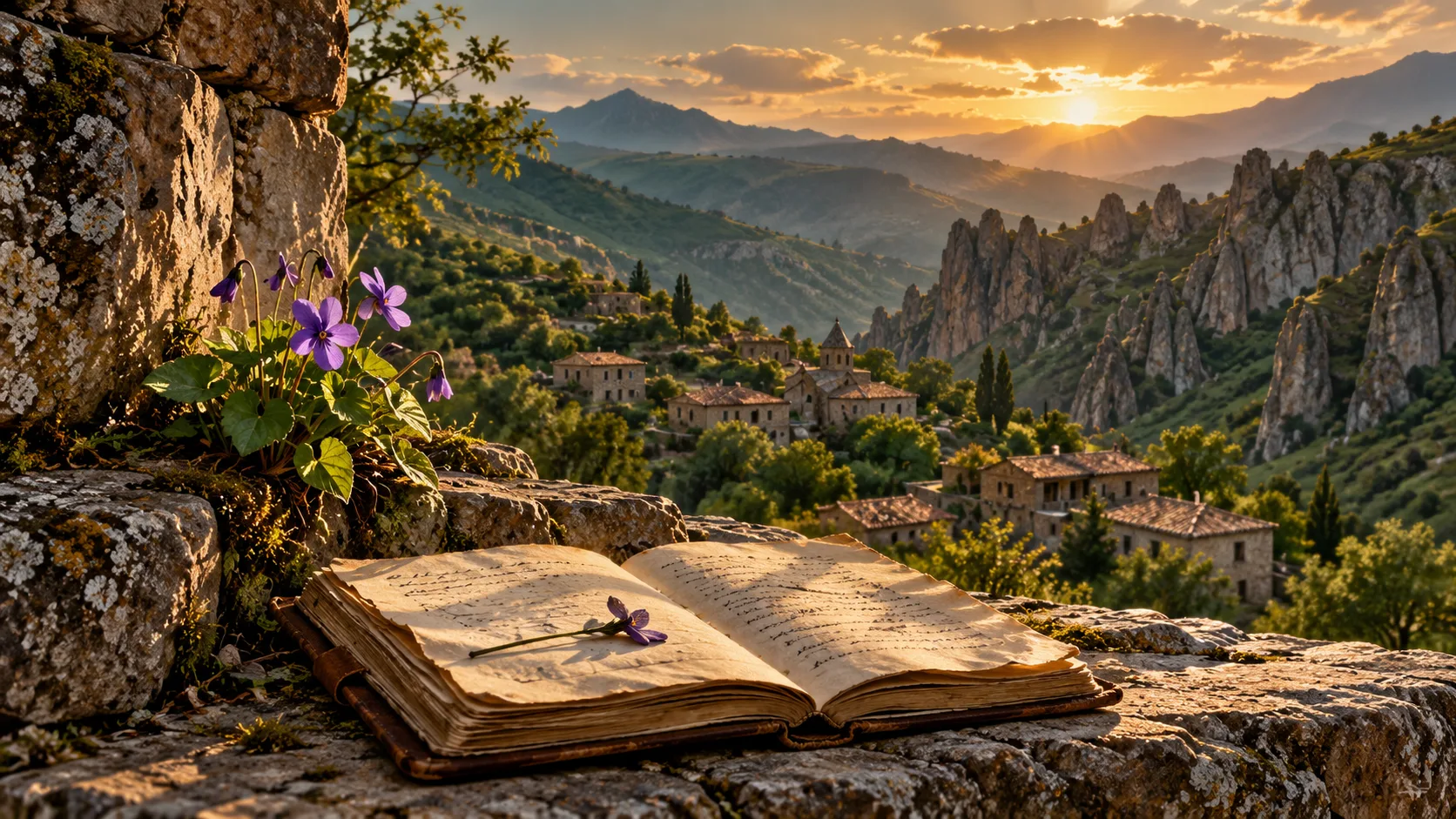
Mtnadzor gathers stories in which the forest and village are living presences. In The Alpine Violet, different visitors encounter the same landscape, but their ways of seeing are profoundly unequal. Beauty does not remove the hardship of those who inhabit it.
His prose often contrasts what an outsider notices with what a local person experiences. Carefully chosen details expose distance between appearance and reality.

Literary legacy
Bakunts offers a way of reading that begins with attention. His rural world contains poverty, dignity, silence and conflict; it is never merely picturesque. The restraint of the narration leaves room for the reader to recognise emotions that the characters cannot easily express.
The cover and section images are AI-generated symbolic illustrations. The gallery portrait comes from a historical source.
Photography Archive
Gallery
Explore more entries
Back to Writers