
HOLY SAVIOUR CHURCH OF SVARANTS
A Centre of Village Faith and Restored Historical Memory
Holy Saviour Church stands in the centre of the village of Svarants in Armenia’s Syunik Province, on the slopes of Mount Aramazd and near the historic territory of Tatev. Built in 1705, it is the village’s principal spiritual monument and a valuable example of late medieval church architecture in Syunik.
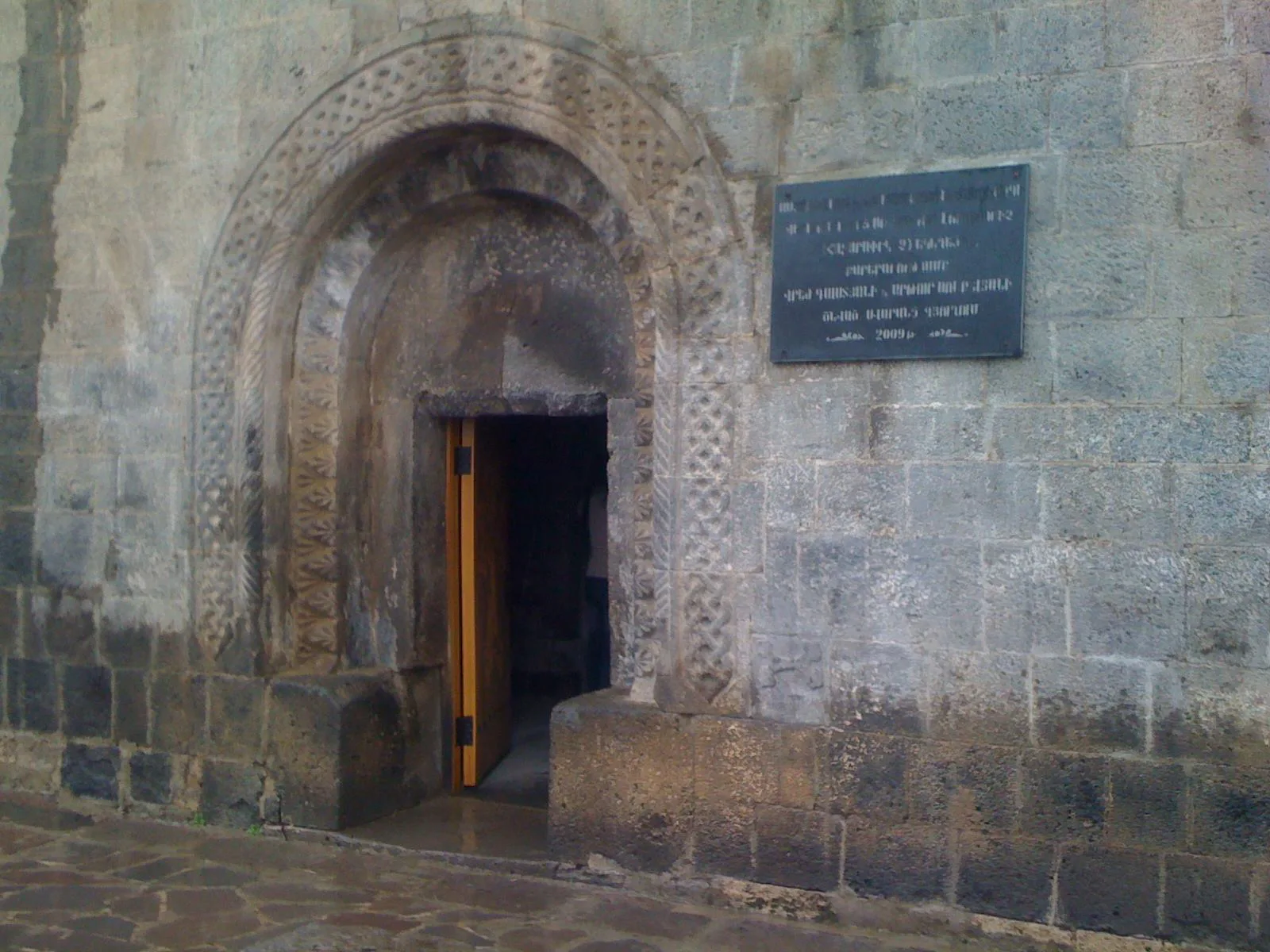
The church is a three-nave basilica constructed from carefully dressed basalt blocks. Its interior is divided into a central nave and two side aisles, while its architectural design is simple, solid and well adapted to the conditions of a mountain settlement. The building has a single entrance on its southern side. A six-line Armenian inscription preserved to the right of the doorway records the construction date and names the builder, Ter Gevorg.
The exterior of Holy Saviour Church is restrained and does not rely on elaborate sculptural decoration. Its character is created by the dark basalt walls, balanced proportions and natural relationship with the village environment. The small bell tower rising above the roof belongs to a later phase of the building’s history but has become a recognisable part of its present appearance.
For centuries, the church served the spiritual life of the people of Svarants. Liturgies, baptisms, family ceremonies and community prayers were held within its walls. In settlements such as Svarants, village churches were more than places of worship: they were centres of communal unity, generational memory and the preservation of local traditions.
During the Soviet period, the church lost its original function and was used as a warehouse. Its interior walls were covered with lime, tombstones from the courtyard were displaced, and a club building was attached to its eastern side. These alterations damaged the historical character of the monument but did not erase its importance from the memory of the local community.
Restoration began in 2008 through the initiative of benefactor Vrej Galstyan. During the clearing and excavation of the site, fragments of pottery and roof tiles, ornamented stones and previously concealed inscriptions were discovered. The restoration was carried out according to a project by architect Stepan Nalbandyan, with active participation from the residents of Svarants. The work was completed in 2009, restoring both the historical appearance and spiritual role of the church.
The significance of Holy Saviour Church is not limited to its age or architecture. It tells the story of a village community’s faith, its experience of loss and its determination to restore its heritage. Today, the church remains one of the principal symbols of the historical memory and continuing spiritual life of Svarants.