
OLD KHOT
A Historic Settlement Built into the Cliffs and a Testament to Syunik’s Mountain Life
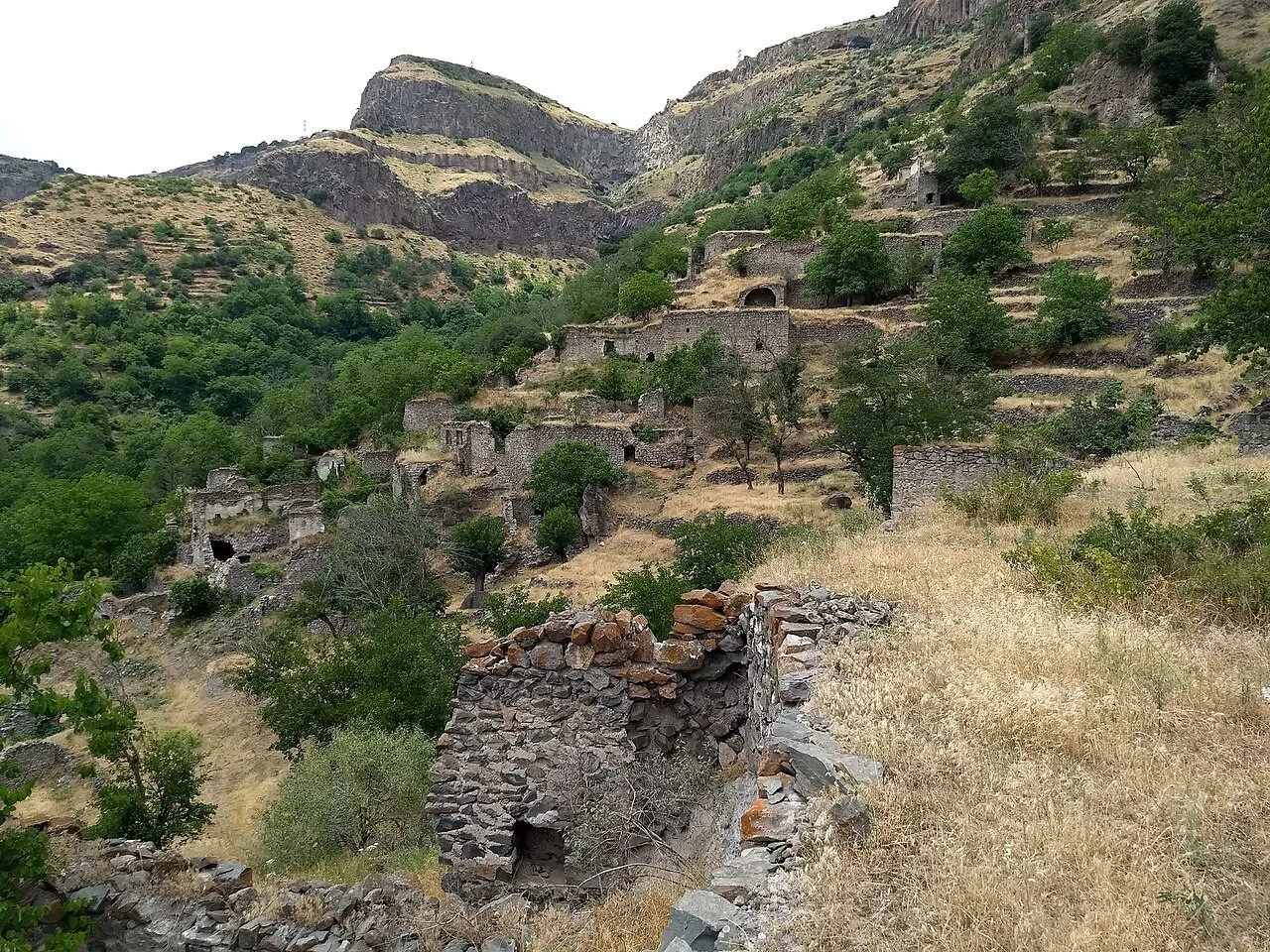
Old Khot is situated in Armenia’s Syunik Province, below the present-day village of Khot, on the steep slopes of the left bank of the Vorotan River. The official register of monuments locates the settlement approximately half a kilometre south of the current village, within a landscape once surrounded by gardens and inaccessible cliffs. Its tiered construction, stone houses and natural caves make the village appear to have emerged directly from the rock.
The inhabitants of Old Khot did more than adapt to the difficult terrain; they transformed it into a complete residential system. Natural caves were enlarged and extended with masonry walls, while houses were constructed at different elevations, one above another. Narrow paths, stone steps and retaining walls connected homes, cellars, livestock shelters, springs and cultivated land. The rock therefore functioned simultaneously as foundation, wall, protection and part of everyday living space.
During the Middle Ages, Khot was closely connected with Tatev Monastery. Historical accounts state that in 1205 Prince Dlen, son of Khazbak, donated the village of Khot and the large garden of Khotaget to the monastery. The village was later confirmed once again among Tatev’s possessions. This relationship demonstrates that Khot was not an isolated mountain community but part of the economic, spiritual and cultural network formed around Tatev.
The settlement preserves traces of churches, chapels, cemeteries and khachkars belonging to different periods. The official register includes a cemetery dating from the 10th to the 20th centuries, containing khachkars from the 10th–11th, 12th–13th and later centuries. The site also contains the ruins of a 17th–18th-century single-nave church with a khachkar dated 1409 incorporated into its wall, the 17th-century Mrgadzori Khach Church and the remains of an 11th–12th-century chapel. These monuments reveal that Old Khot’s sacred landscape developed over many centuries. (Arlis)
The cemetery is especially important for understanding the settlement’s historical continuity. Its khachkars and ram-shaped gravestones preserve the memory of inhabitants from different periods. In recent years, employees of Armenia’s monument-protection service have raised, stabilised and cleaned several khachkars that had remained buried beneath thick layers of soil, helping preserve some of the site’s most vulnerable monuments.
From the middle of the 20th century, residents began moving from the gorge to flatter and more accessible ground, where the present village of Khot developed. The official monument register dates the abandonment of the old settlement to 1960 and associates it with a shortage of water. After the inhabitants left, the houses gradually deteriorated, vegetation covered the paths and the village became deserted, though its historic structure remained clearly visible.
The significance of Old Khot is not limited to its individual churches or khachkars. It is a complete settlement preserving a relationship between people and the mountain landscape that developed over centuries. Its caves, houses, terraces, cemeteries and sanctuaries tell the story of a community that transformed an inaccessible gorge into an organised and sustainable place to live. Old Khot remains one of the most expressive examples of Syunik’s rural architecture, spiritual memory and disappearing historic settlements.