
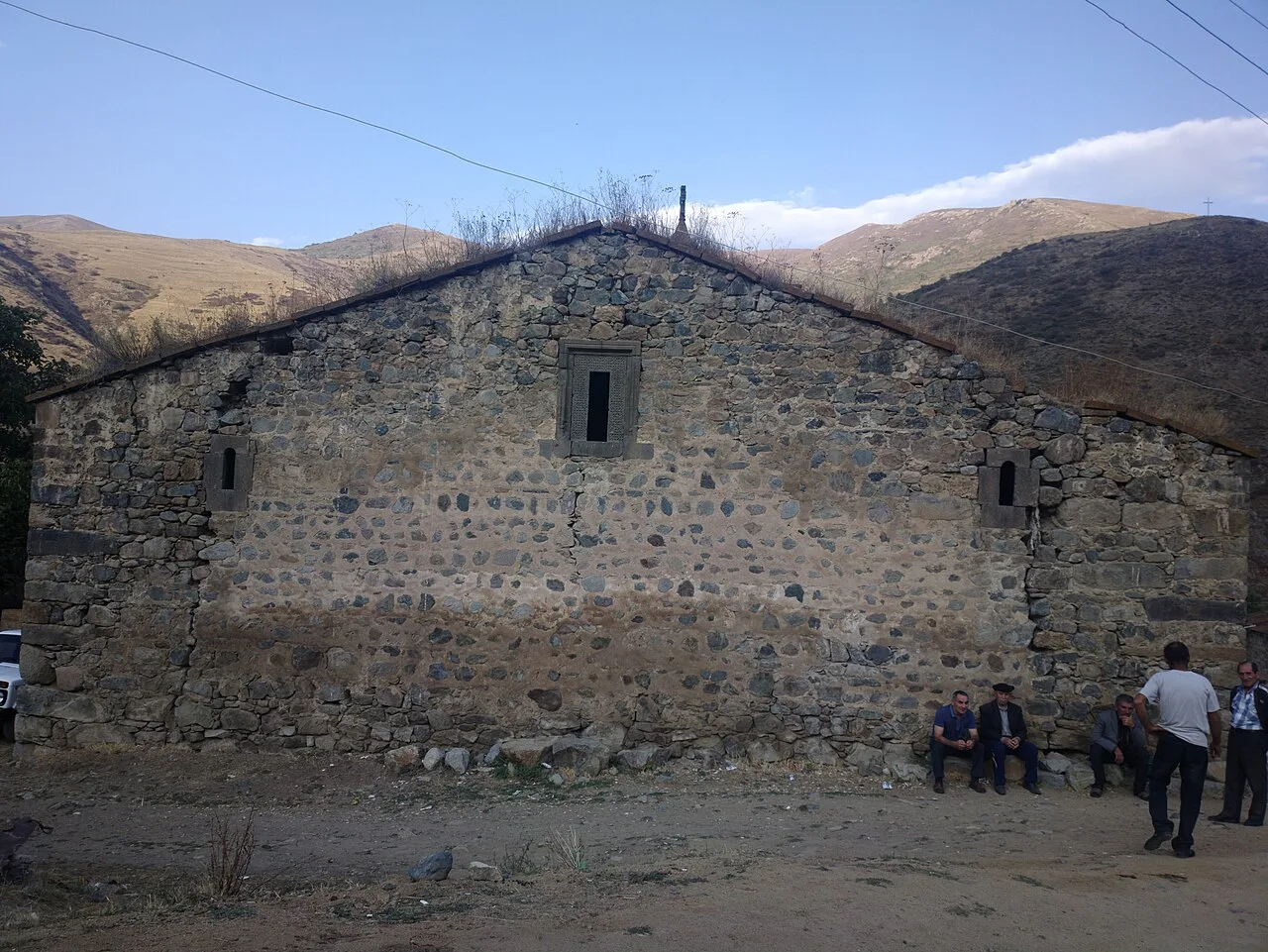
SAINT GEVORG CHURCH OF LOR
A Seventeenth-Century Sanctuary and Restored Community Memory
Saint Gevorg Church stands in the village of Lor in Armenia’s Syunik Province and is one of the settlement’s important historical and cultural monuments. Preserved within the village, the church has been connected for centuries with the spiritual life, family ceremonies and collective memory of the local community.
The church was built in 1666. A historical record associates its foundation with Khoja Poghos, a resident of Agulis and the son of Mahdesi Petros. This detail also reflects the connections that existed between Armenian communities during the 17th century, when benefactors and merchants originating from different settlements frequently supported the construction of churches and the preservation of spiritual centres.
Saint Gevorg is a three-nave basilica with the restrained and solid composition characteristic of late medieval Armenian village churches. The division of the interior into a central nave and two side aisles created a relatively spacious prayer hall without requiring a complex domed structure. Its stone walls, vaulted sections and limited decoration emphasise the practical and community-centred character of the building.
The church is dedicated to Saint George the Warrior, who represents faith, courage and steadfastness in Christian tradition. Armenian sanctuaries bearing his name often became centres of pilgrimage and community celebrations. The church in Lor likewise served not only as a place of worship but also as a space that united the villagers through shared faith and remembrance.
Over time, the church ceased to operate fully and required restoration. Renovation was completed in 2024, and on 27 September 2025—the feast day of Saint George—the church was ceremonially reconsecrated and reopened to worshippers. The service was conducted by Bishop Makar Hakobyan, head of the Diocese of Syunik, with the participation of the clergy.
The value of Saint Gevorg Church extends beyond its 17th-century architecture. It preserves the story of Lor’s faith, benefaction and continuity between generations. Following its restoration and reconsecration, the historic monument has once again become an active spiritual centre within the life of the modern community.