
ARMENIAN MONASTERY OF SAINT SAVIOUR
Jerusalem, Israel
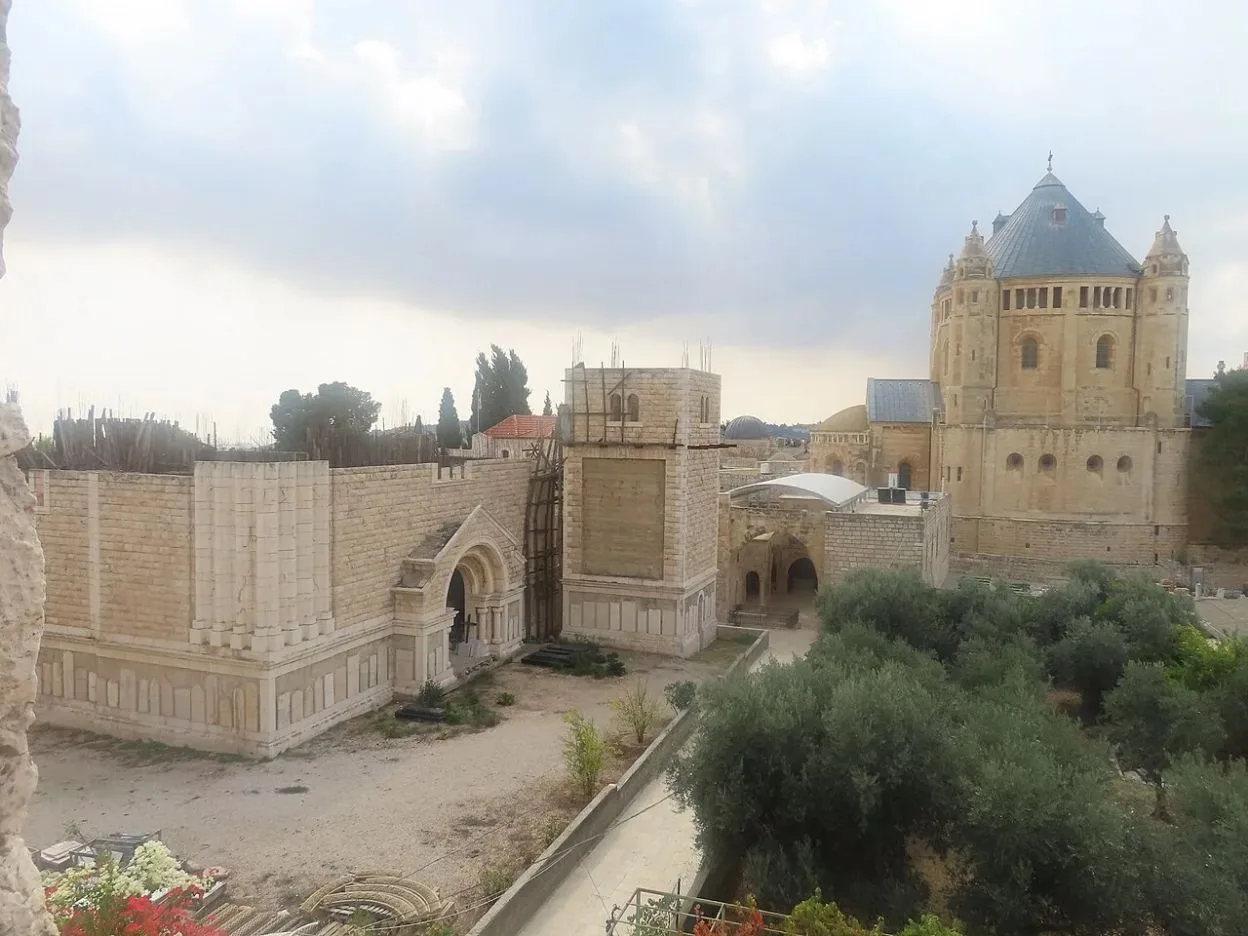
The Armenian Monastery of Saint Saviour in Jerusalem, sometimes also referred to as the Monastery of the Holy Saviour, stands on Mount Zion, outside the walls of the Old City and south of Zion Gate. It belongs to the Armenian Patriarchate of Jerusalem of the Armenian Apostolic Church and is one of the most important sanctuaries bearing witness to the centuries-old Armenian presence in the Holy Land. The complex includes an ancient church, an enclosed courtyard, monastic buildings, a burial area and the unfinished structure of a newer church begun at a later period.
The significance of the sanctuary is closely connected with the Gospel narrative of the Passion of Christ. According to Armenian ecclesiastical tradition, the house of the high priest Caiaphas once stood on this site. Jesus Christ is believed to have been brought here after His arrest in the Garden of Gethsemane and held until He was sent to Pontius Pilate. For this reason, the monastery has also been known in Arabic tradition as the “Monastery of the Imprisonment of Christ.” This tradition transformed the site into a place commemorating the final hours of Christ’s earthly life and the unjust trial He endured.
The monastery’s older church is generally dated to the fourteenth century, although Christian veneration of the site may have earlier roots. The architecture of the complex is restrained and enclosed, reflecting the character of a medieval Eastern Christian monastic environment. Its stone walls, arcaded passages and secluded courtyard create a space separated from the outside world, where architecture serves prayer, silence and historical memory rather than splendour.
Since the eighteenth century, the monastery courtyard has served as a burial place for the Armenian Patriarchs of Jerusalem. Their tombs stand near the surrounding arcades, while bishops who devoted their lives to the Armenian Church and the guardianship of Jerusalem’s Armenian holy places are buried beneath the paving in the central courtyard. An Armenian civil cemetery also adjoins the monastery. Saint Saviour is therefore not merely a place of worship, but also a landscape of spiritual memory and generational continuity for Jerusalem’s Armenian community.
The monastery complex suffered considerable damage during the military conflicts of the twentieth century, particularly in 1948 and 1967. It was later returned to Armenian administration and restored. During the 1970s, construction of a new church began beside the older sanctuary, but the building was never fully completed. The coexistence of ancient, restored and unfinished structures reflects both the antiquity of Jerusalem’s Armenian heritage and the historical difficulties it has endured.
The importance of the Monastery of Saint Saviour rests upon several interconnected layers. It is a sanctuary associated with the memory of Christ’s Passion, a monument to the medieval Armenian monastic presence, a resting place of the Armenian Patriarchs of Jerusalem and a testimony to the enduring presence of the Armenian people in the Holy Land. Its stones, enclosed courtyard and tombs tell the story of a community that, for centuries, not only travelled to Jerusalem as pilgrims but also assumed responsibility for safeguarding Christian holy places.
The Monastery of Saint Saviour should therefore be understood not simply as an individual ecclesiastical complex, but as a central landmark in the history of Armenian Jerusalem. Here, Gospel memory, medieval monastic tradition, patriarchal heritage and the preserved cultural presence of the Armenian people in the Holy Land are brought together.