
HELEN AND EDWARD MARDIGIAN ARMENIAN MUSEUM OF JERUSALEM
Jerusalem
The Helen and Edward Mardigian Armenian Museum is situated in the Armenian Quarter of Jerusalem’s Old City, within the monastic compound of Saint James. It is one of the most important cultural institutions of the Armenian Patriarchate of Jerusalem, presenting not only valuable examples of Armenian art but also the broader history of the Armenian people’s centuries-old presence in the Holy Land.
The museum was established in 1969 with the support of Armenian-American benefactors Edward and Helen Mardigian. It was created to preserve and present the treasures of the Armenian Patriarchate of Jerusalem, historical documents and Armenian cultural heritage. After remaining closed for decades and undergoing extensive renovation, the museum reopened in 2022 with a redesigned exhibition, modern museum facilities and a more comprehensive historical narrative.
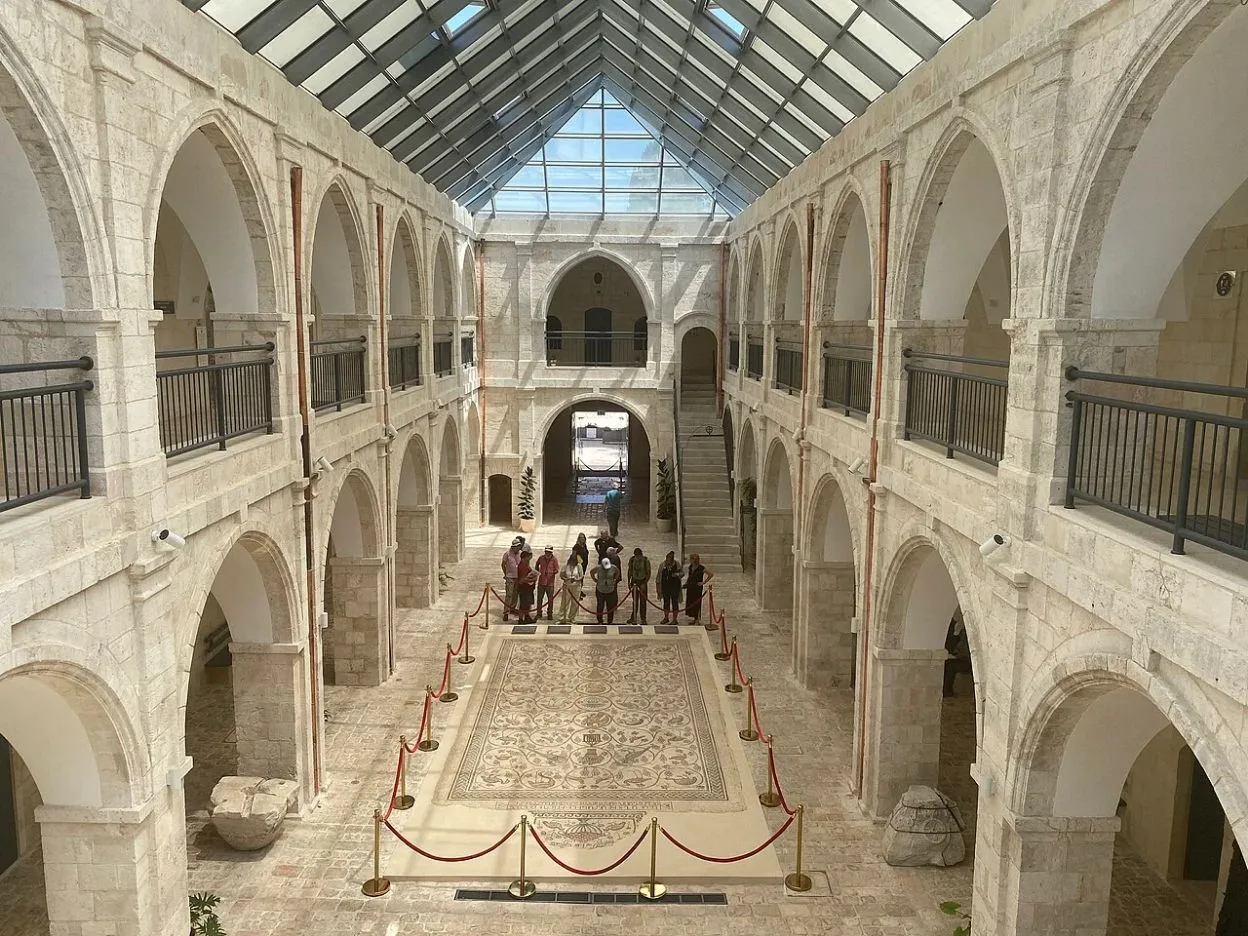
The museum building is itself a witness to the history of Armenian Jerusalem. Constructed in the mid-nineteenth century, it originally served as accommodation for Armenian pilgrims. Following the Armenian Genocide, it provided shelter for children who had lost their parents. The building later housed a theological school, a library and a smaller museum. It is therefore more than an exhibition space: its walls preserve successive histories of pilgrimage, loss, refuge, education and national recovery.
The exhibition presents more than sixteen centuries of Armenian presence in the Holy Land. Armenian clergy, pilgrims, craftsmen, merchants and intellectuals helped shape Jerusalem’s distinctive Armenian environment over many generations. The museum demonstrates that Armenians were not merely temporary pilgrims to the city. They established a permanent community, constructed churches and monasteries, copied manuscripts, developed printing and participated in the guardianship of Christian holy places.
One of the museum’s central exhibits is a fifth- or sixth-century Armenian mosaic floor discovered in 1894 on the site of an ancient Armenian monastic complex in Jerusalem. Its rich composition of birds, vines and plant motifs is accompanied by an Armenian inscription. The text is dedicated to the memory and salvation of Armenians whose names are known to God. The mosaic is an exceptional testimony to the early Christian Armenian presence and demonstrates the existence of an organised Armenian monastic community in Jerusalem during the early medieval period.
The collection includes Armenian manuscripts, crosses, chalices, ecclesiastical vestments, khachkars, Armenian tiles from Kütahya, carpets, coins, seals, historical photographs and documents. Several exhibits illuminate the development of Armenian printing in Jerusalem and one of the city’s earliest printing traditions. The museum’s galleries reveal the interconnected development of Armenian manuscript culture, illumination, liturgical art and craftsmanship.
An important part of the museum is devoted to the Armenian Genocide. It presents not only the history of mass killing and displacement, but also the experiences of survivors who found refuge in Jerusalem. Many later became residents of the Armenian Quarter, as well as craftsmen, photographers, clergy and cultural figures. The Genocide galleries therefore tell a story not only of destruction, but also of the reconstruction of Armenian life in Jerusalem.
The Helen and Edward Mardigian Armenian Museum brings together archaeological discoveries, ecclesiastical treasures, historical documents and human memory. It presents Armenians not as marginal participants in Jerusalem’s history, but as one of the ancient communities that helped shape the city’s Christian character. The museum is simultaneously a place of remembrance, an educational centre and a testimony to the continuity of Armenian Jerusalem.