
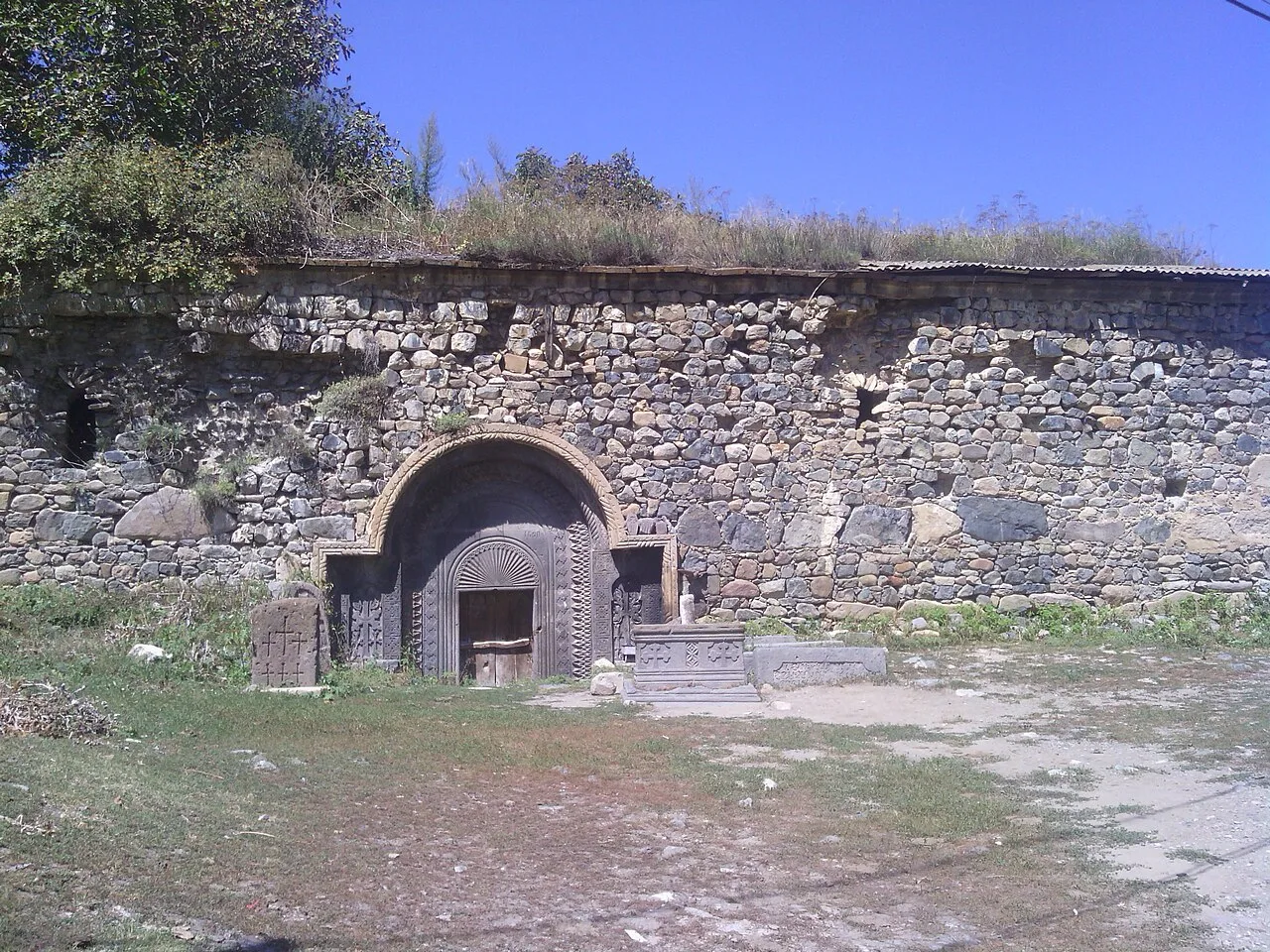
HOLY MOTHER OF GOD CHURCH OF GETATAGH
A Monument of Village Faith and Manuscript Culture
The Holy Mother of God Church is located in the village of Getatagh in Armenia’s Syunik Province, within the mountainous landscape of Sisian. Standing among the village’s stone-built surroundings, it is Getatagh’s principal historical monument and a valuable example of late medieval church architecture in Syunik.
The existing church was constructed in 1651–1652. Its architectural form continues the long-established tradition of Armenian basilicas, leading some scholars to identify the influence of earlier, early medieval principles in its composition. The surviving monument and its principal structure, however, date from the middle of the 17th century.
The Holy Mother of God Church is a three-nave basilica. Two pairs of supports divide the interior into a broad central nave and two narrower side aisles. The church has no dome and is covered by a system of arches and vaults. This arrangement gives the building a simple, balanced and solid appearance suited to the construction traditions of Syunik’s mountain settlements.
The architecture is restrained. Built from local stone, the church is characterised by massive walls, small windows and a proportionate interior that creates a concentrated atmosphere of prayer. Its importance lies not in elaborate decoration but in the clarity of its forms, structural strength and harmonious relationship with the village landscape.
During the 17th century, Getatagh was also known as a place of manuscript production. In 1673, a scribe and illuminator named Ghukas copied and decorated a Gospel here. This record demonstrates that spiritual life around the village church extended beyond liturgical worship. Written culture was also preserved and transmitted, while manuscript production connected Getatagh with the wider educational and artistic traditions of Syunik.
For centuries, the church served as a setting for prayer, baptisms, family ceremonies and memorial rites. In villages such as Getatagh, the church formed the centre of community life, bringing together spiritual practice, family memory and continuity between generations.
Today, the Holy Mother of God Church survives in a partially ruined condition. Time, natural conditions and prolonged neglect have damaged sections of the building, although its principal architectural volumes remain visible. The church continues to define the historic character of Getatagh.
Its significance is not limited to age. The church bears witness to the faith, cultural life and manuscript heritage of a small mountain community. It reminds us that Armenian culture was preserved not only in major monasteries and cities but also within the modest stone churches of remote villages.