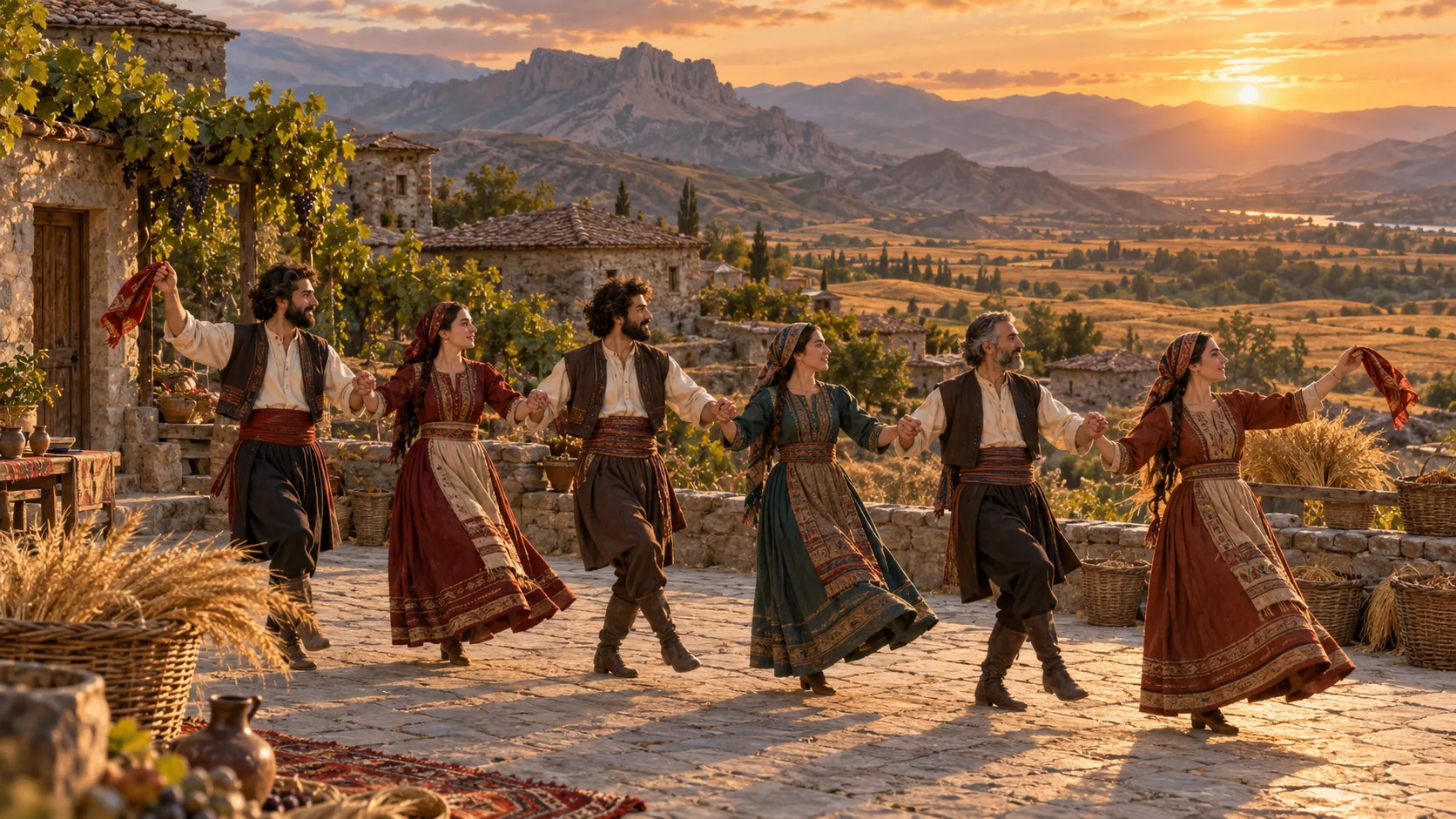
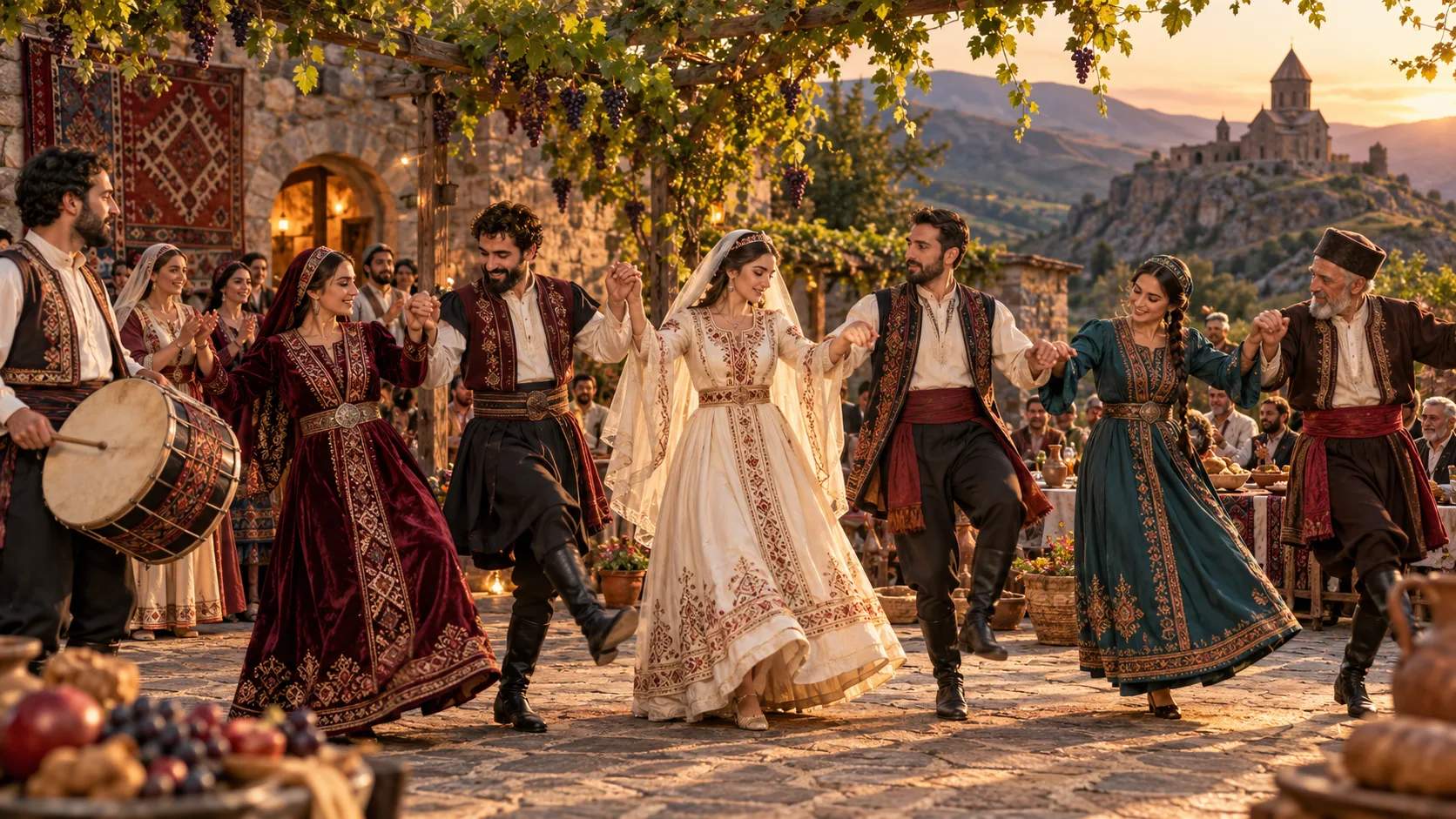
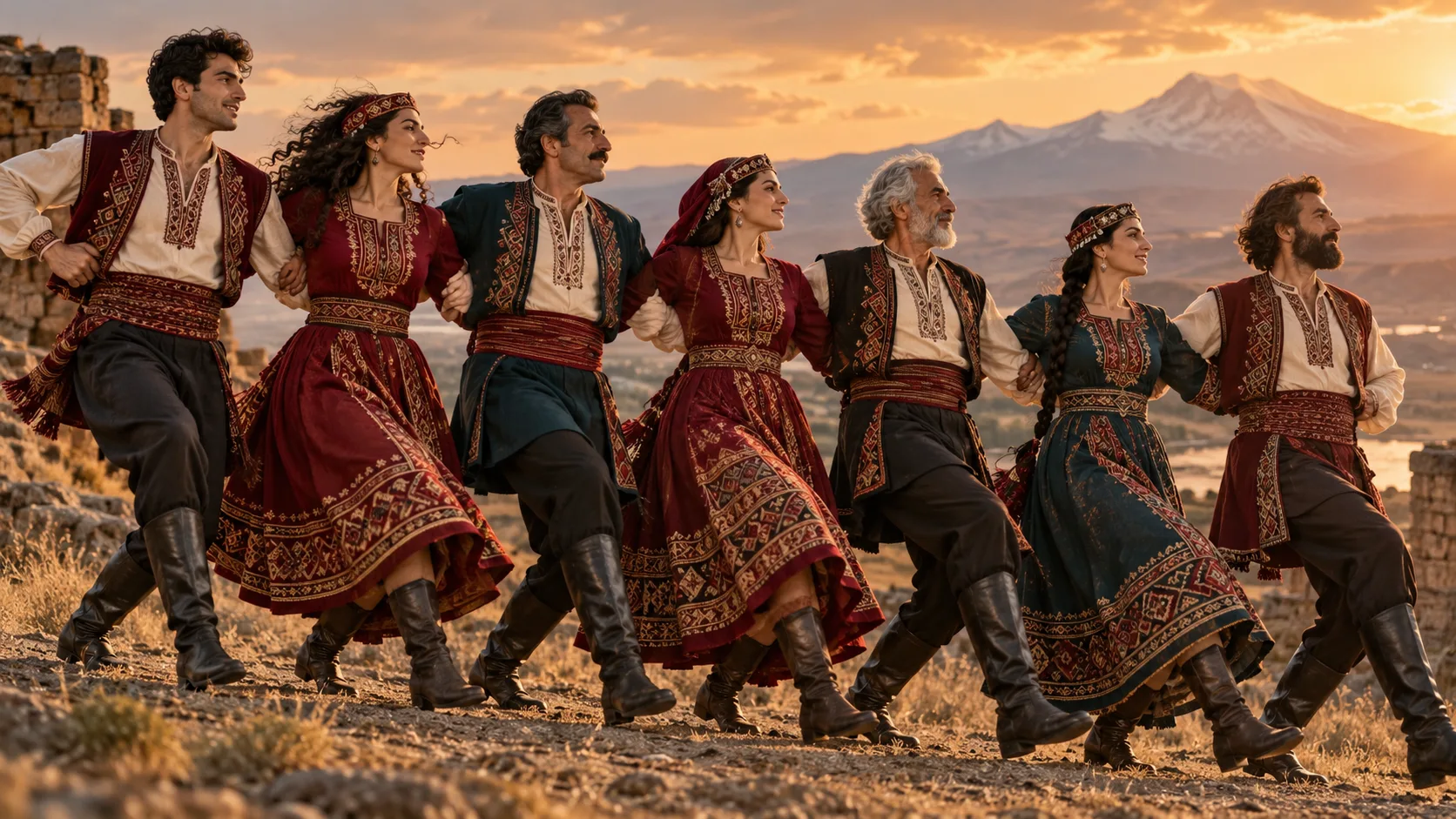
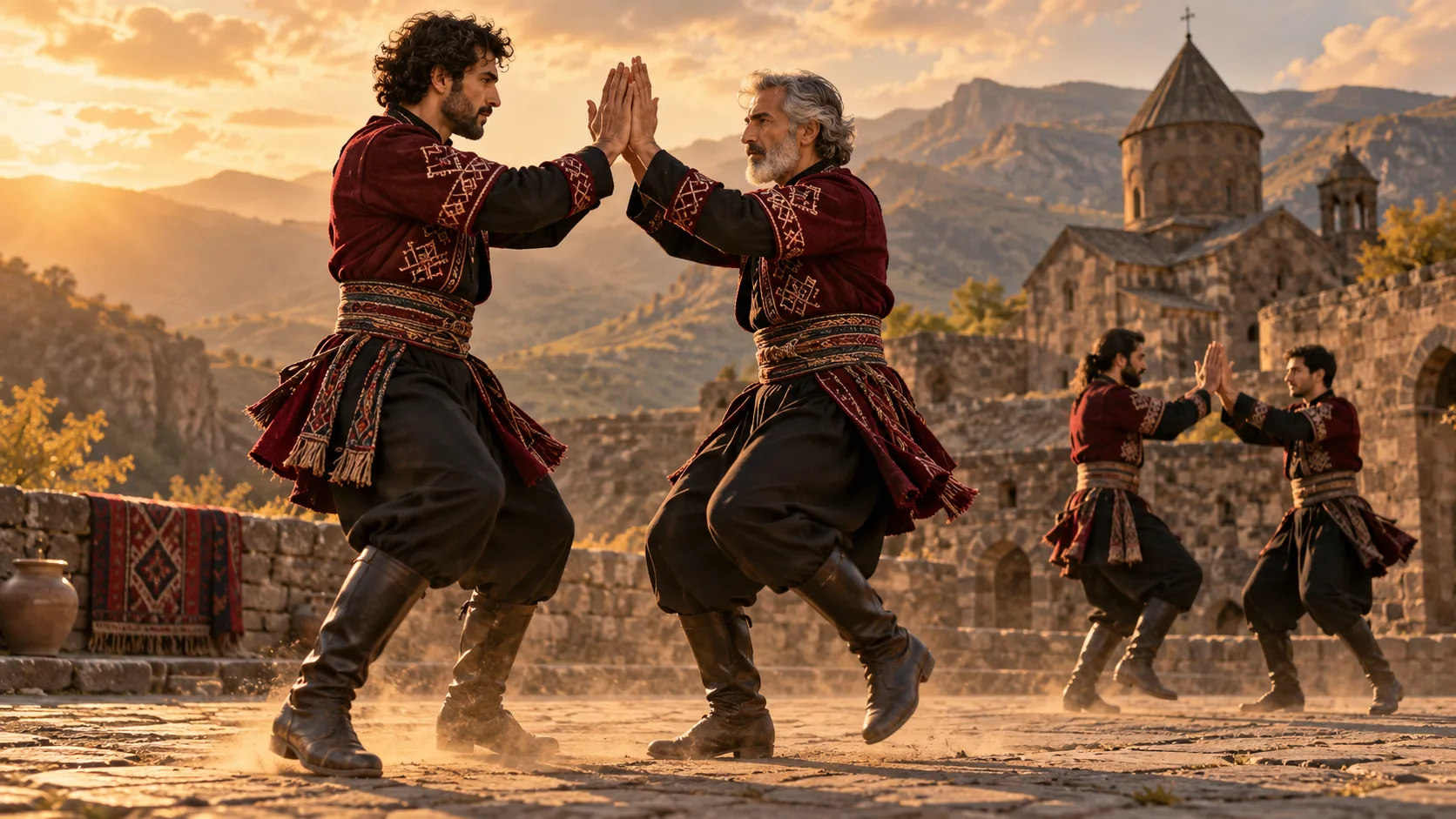
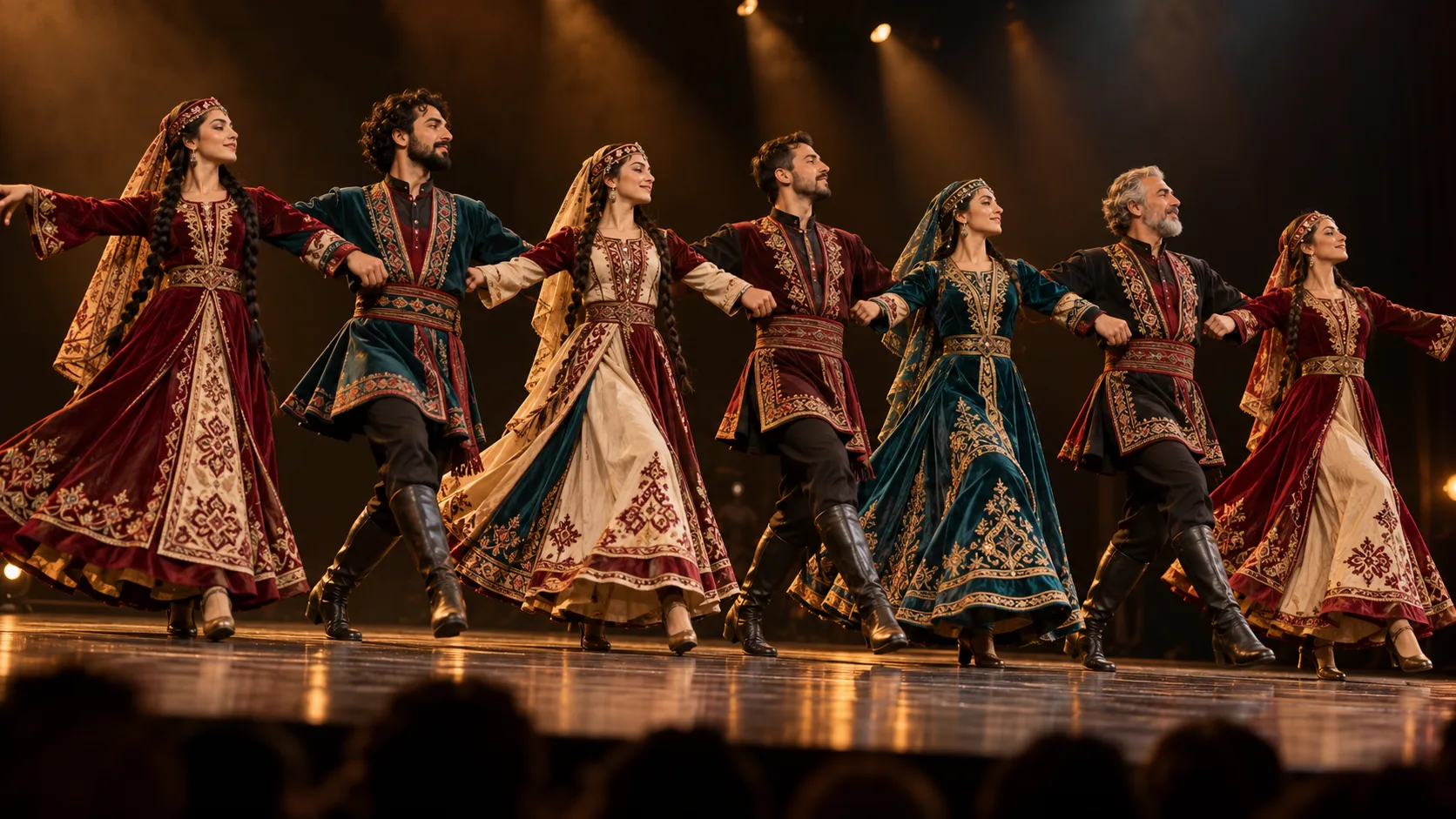
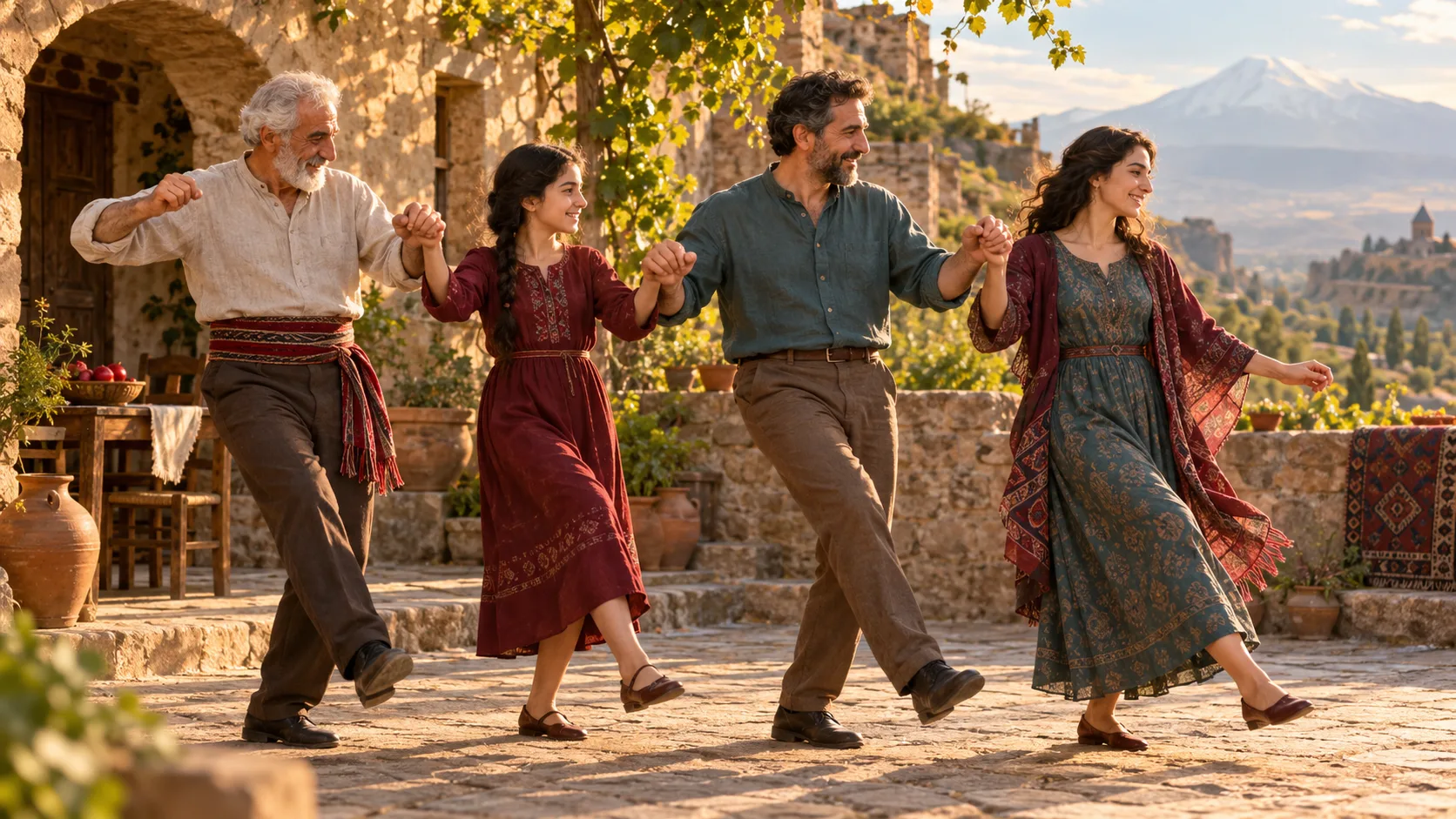
Armenian dance is not merely stage movement or festive entertainment. It is history transmitted through the body, where the step, the circle, the position of the hands, the movement of the shoulders, and the shared rhythm become a language of cultural memory. In Armenian dance, a person does not appear alone: they stand within the community, hold another person’s hand, move in a common rhythm, and in this way restore the feeling of unity.
Through dance, the Armenian people have expressed joy, victory, resistance, mourning, prayer, everyday labor, wedding ritual, and social solidarity. For this reason, Armenian dance should be viewed not only as an art form, but also as an ancient mechanism for preserving identity. It has preserved what was sometimes not preserved in written sources: the memory of the body, communal order, the structure of celebration, and the human connection to the land.